
Rubin Verebes is the managing editor of Foodie and is very opinionated. Transforming his hobby of eating and drinking into a career, he shares his account of Hong Kong’s F&B scene and the worldwide state of dining in Rubin’s Take, his dedicated opinion column.
My mouth and wallet have journeyed down the crevices of New York, London, and Hong Kong to an often extreme length – and cost – as a food journalist, three cities I have called home, with the last my current long-term residence.
As I aptly put it in debates advocating for my hometown Hong Kong’s raw culinary strength, I find New York to be the centre of the America’s food world, London has Europe at its heart, but Hong Kong is where Asia is best represented.
Speak to a Hong Konger after a visit to either city and they will predictably bemoan Hong Kong’s lacking a) ‘authentic’ interpretations, b) dining affordability, c) regional variety, or d) all of the above! You win a hundred dollars!
Yet, by all accounts, I believe Hong Kong to be the best place on earth to eat; forget its perceived downsides, it simply trumps its Atlantic cousins with its sheer spectrum of eccentric dining experiences.
Where can you enjoy cucumber sandwiches and Dom Perignon aboard a rickety 90-year-old boat trailing the length of the harbour or seize a beef noodle order on a mobile gas-guzzling Chinese sampan if not in Hong Kong?
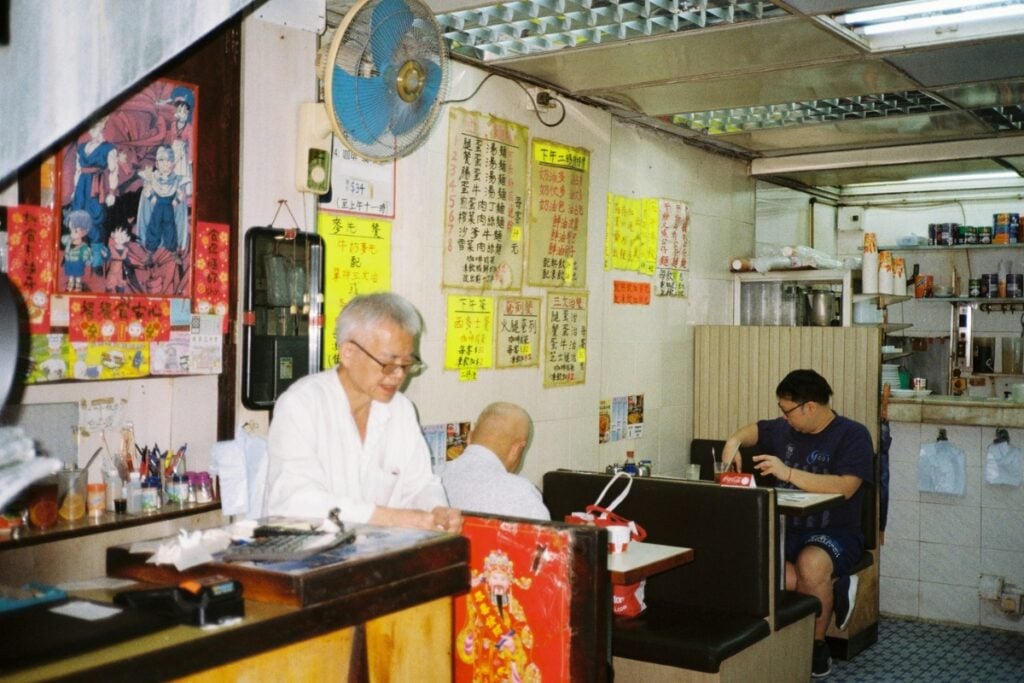
On weekends, diners craving salt and garlic, and swigs of European beer to mellow out, pour into local district civic centres for meals at a dai pai dong, traditional (largely) indoor stir-fry restaurants. Sitting floors above badminton courts and flower stalls, multi-course wine-pairing dinners are protocol, prepared by chefs in white stringy vests.
At a 100-year-old dim sum restaurant chain, 24-hour access to plump meat-packed parcels is granted next to two nightlife districts and the departures area at the airport.
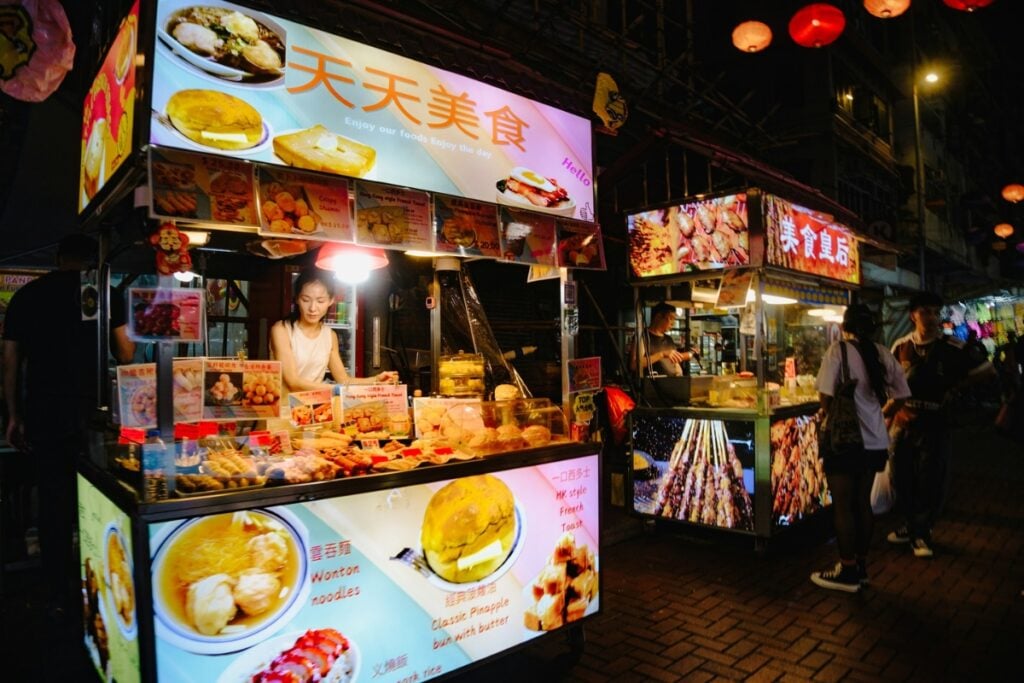
It is possible to traverse the north-south arterial Nathan Road of Kowloon with a pointed stick digging into an unlimited source of sticky goodies found in white paper bags.
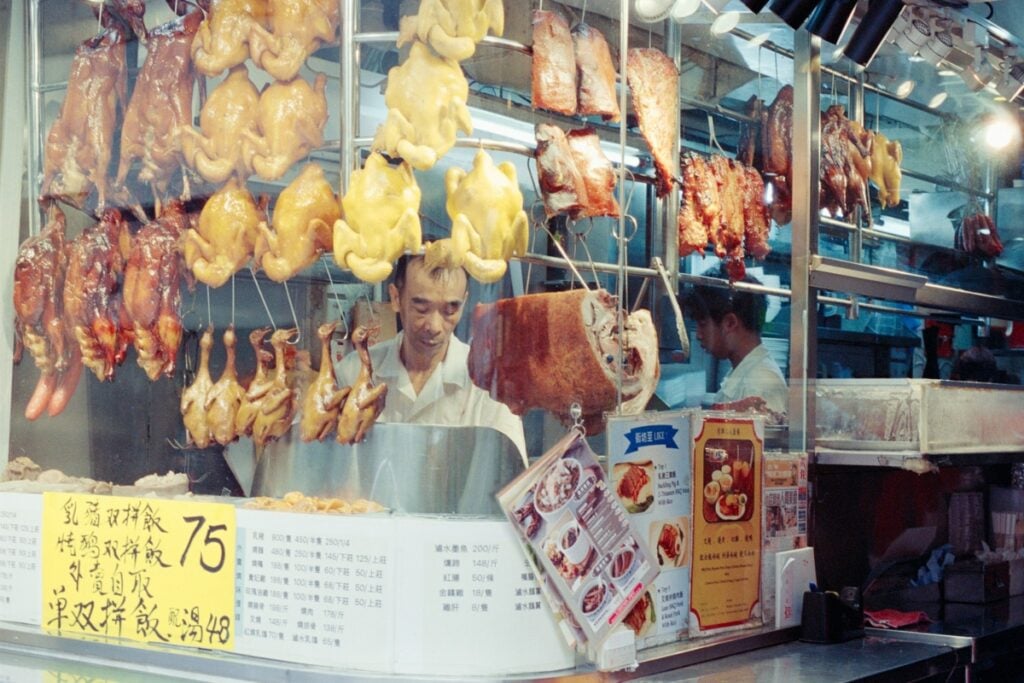
In the city’s northern regions, there exists a barbecue restaurant which slaughters, cures, roasts, and serves pigs at its mammoth quarters. Across a mountain range, a residential neighbourhood hosts half a dozen roast duck operations, which too prepare hundreds of birds on-site.
As tried as the traditions of fine-dining can be, such experiences here are available on a remote island beach, a posh villa overlooking our Shenzhen neighbour, a retired passenger ferry, and occasionally inside a haunted abandoned mansion.
A taxi ride can have you enjoying pizza by the beach to cocktails on a mountain in thirty minutes.
The Hong Kongers reading this need not reminding of what is accessible to us. For the international, this may be the final proof why our city beats yours.
The views expressed in this column are those of the authors and do not represent or reflect the views of Foodie.

