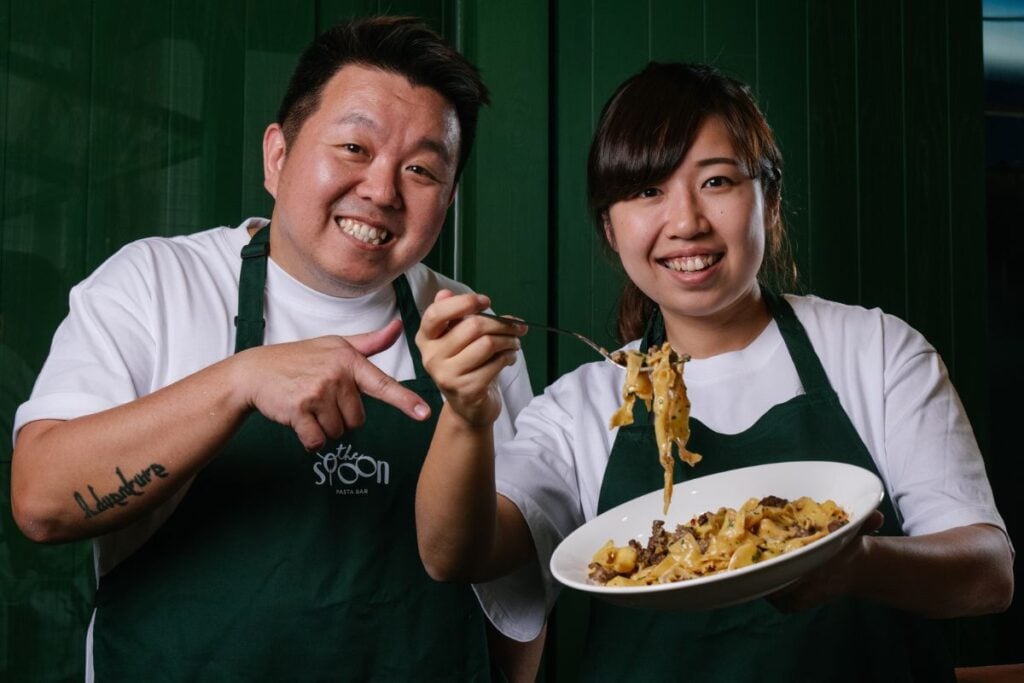
Over the past few months alone, Hong Kong has seen at least a dozen prominent new pasta bar openings. Names like Zozzona, La Volta, The Spoon, and others have all opened in quick succession, all delivering pasta in a vibey space and at a spend that feels approachable.
One cannot help but ponder what might be fuelling this wave of cool and casual pasta bar concepts. For those with an ear to the ground for all things dining in Hong Kong, one might even begin to wonder whether consumers are really asking for it.
Is this movement being driven by genuine consumer demand for pasta bar concepts, by economic pressures of high rents and food costs dictating the type of concepts will work in this economy, or by a trend that’s simply having its moment?
From what we can tell there is not a single answer to explain this phenomenon, but the product of multiple elements converging from an economic movement.
A polarising dining scene
Hong Kong’s dining scene has experienced vast changes over the past few years, with the pandemic, global economic climate, and consumer spending power presenting a new challenge to the city’s F&B.
At the top end of spending, fine dining still has its audience. However, we are seeing the ‘middle band’ thinning, where the fine-casual ‘nice dinner’ is now being squeezed by cautious household spending and a search for better value existing beyond Hong Kong, including Shenzhen.
This shift could be guiding what is truly viable for a restaurateur. In Hong Kong, we’re seeing more concepts engineered for what I like to refer to as ‘high-street dining’: priced to feel like a treat, yet comfortable enough to become a repeat habit, rather than an annual celebration. Hong Kong’s new pasta bars sit within this lane.
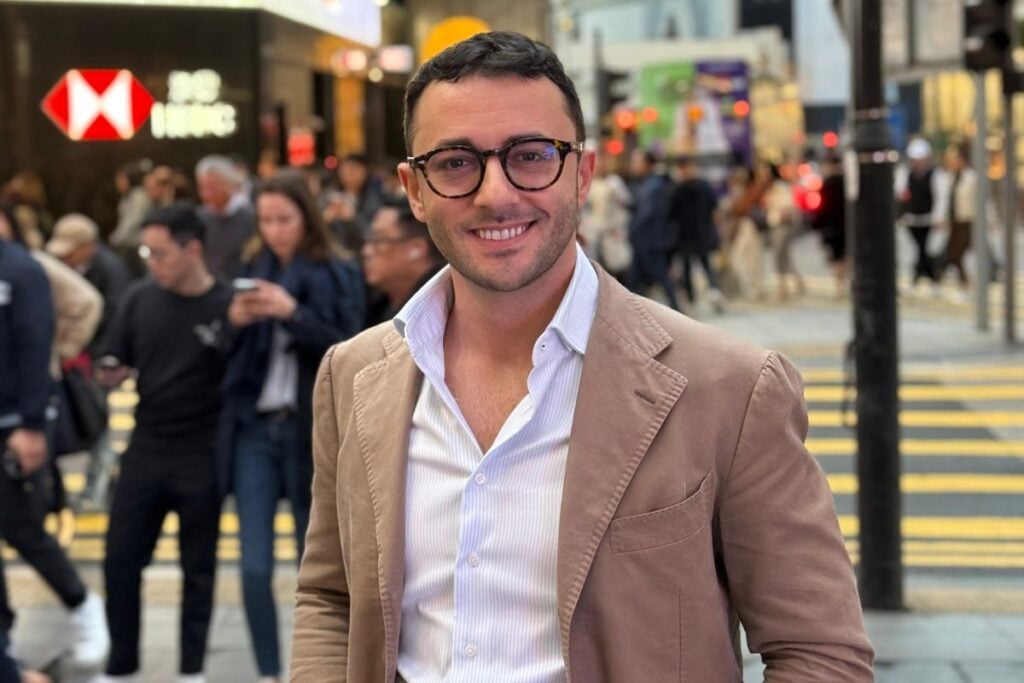
“In Hong Kong’s F&B world, where costs for everything from prime ingredients to sky-high rents are climbing, pasta bars offer that sweet spot of indulgence without the hefty price tag,” shares Donato Altamura, co-founder of Bravo Culinary Solutions, speaking on pasta bars as “a mini splurge in uncertain times”.
For Donato, Hong Kong diners still want to enjoy luxury spending, just different types of luxuries at different price points.
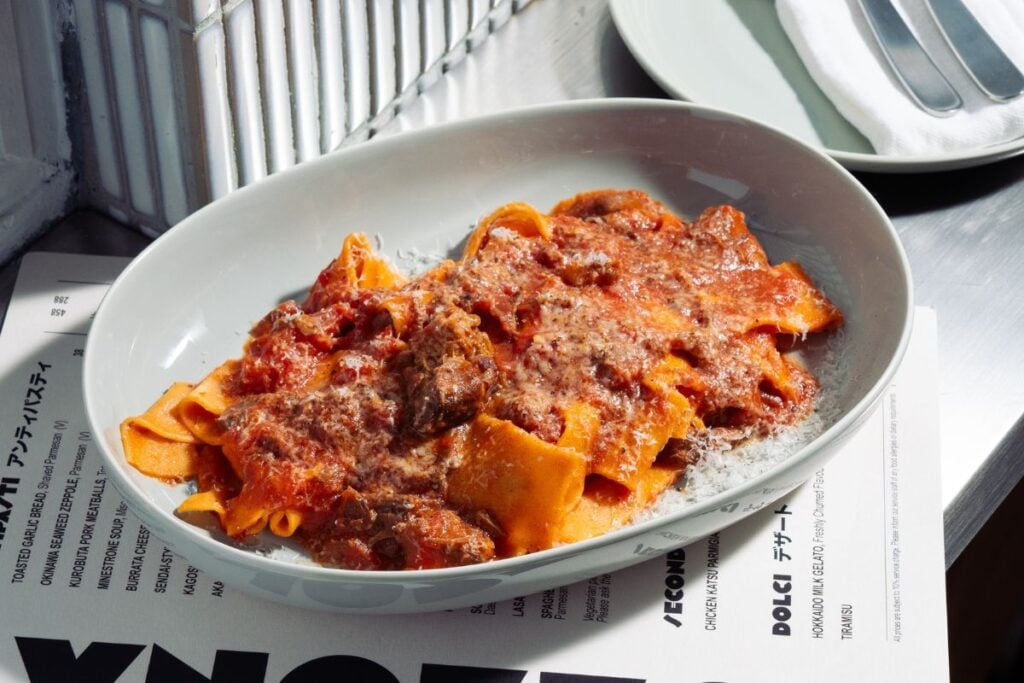
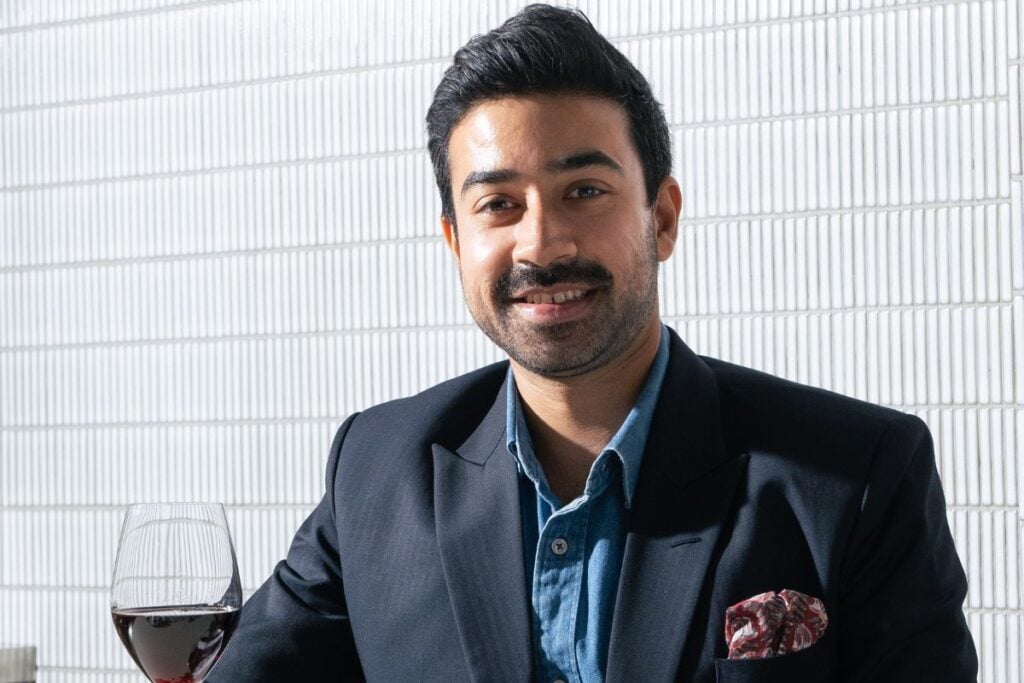
Where local restaurateurs are concerned, Hong Kong’s current F&B climate could be referred to as “a lipstick economy,” which Vidur Yadav, co-founder of Zozzona puts it at, referring to the notion that consumers will still spend money on small luxuries such as lipstick or a nice dinner during economic downturns.
Operating Tokyo-style Italian pasta bar Zozzona in Tsim Sha Tsui, Vidur says: “While disposable income may have come down slightly, our desire for comfort, indulgence and ‘feel good’ still remains. Hence, the consumption of more affordable luxuries like pasta, pizza, coffee, and baked goods.”
Casual pasta bars fit their purpose now with a sense of warmth and touch of craft without forcing the customers to spend big. As Hong Kong diners have become increasingly money conscious when dining out, pasta is an easy ‘yes’ for dinner. You know what it is, you know roughly what it should cost, and you know you’ll leave satisfied.
In a city where weekend plans have increasingly come to compete with a trip over the border to Shenzhen, or farther afield like Taipei, Tokyo, and Bangkok, and where value comparisons are constant, restaurants increasingly need to answer the question of ‘Will I regret spending this?’ Pasta lowers the chance of buyer’s remorse.
Why pasta works for operators right now
If consumer comfort is one side of the equation of pasta bars, operator comfort is the other. This is where the pasta bar concept starts to look like less of a coincidental trend and more of a calculated response to the market.
The fundamentals of the F&B business in Hong Kong are unforgiving: rental concessions that were made during and following the pandemic are widely expiring, food costs are volatile and rising, and demand for staffing has started to exceed supply, particularly for more ambitious concepts that require more technically savvy staff.
Pasta bars offer a comparatively controlled model, such as:
- Streamlined menus reducing inventory and complexity
- Repeatable ‘mise-en-place’ supporting consistency with lean operations teams
- Flexible pricing system with approachable signatures and premium add-ons
- Small-footprint viability where tables can be turned over quickly and small kitchens that can remain small in size.
“The landscape’s brutal for many other ideas [in Hong Kong]. Over-the-top fine dining or ultra-specialised niches often falter because they lack quick adaptability. Pasta bars shine here. They’re straightforward, crowd-pleasing, and perfect for everyday foodie’s cravings in a competitive market,” shares Donato.
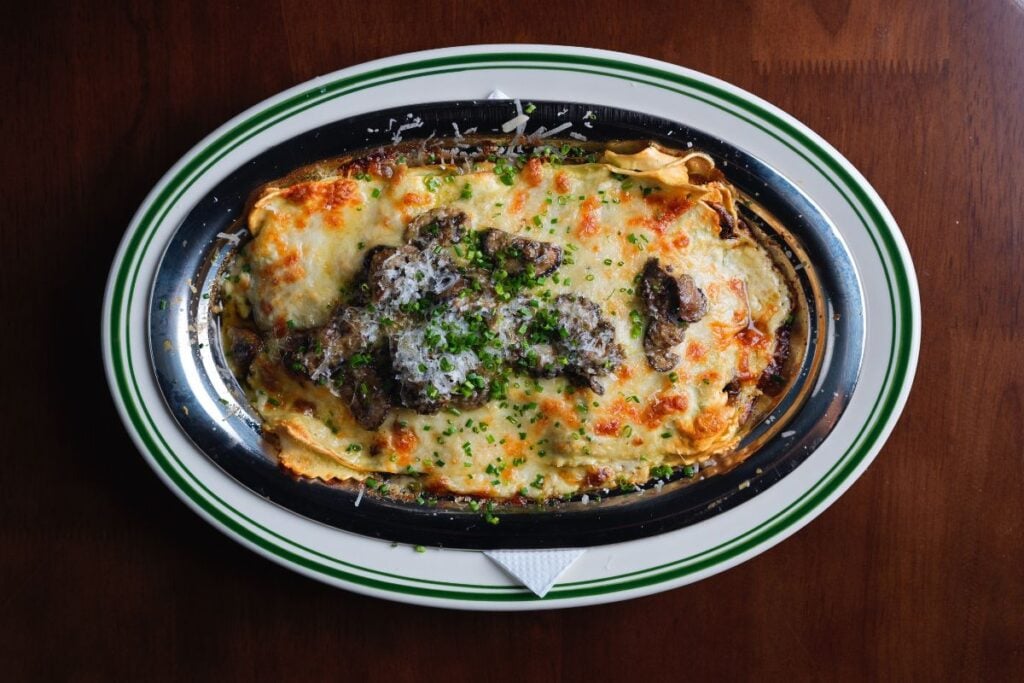
Pasta is familiar—but wildly versatile
The ‘quick and casual’ luxury model is working, but why pasta specifically? Pasta is winning because it lets operators employ a time-tested and financially viable model. With relatively little operational changes, restaurateurs can create a wildly different concept.
For example, with The Spoon, Southeast Asian flavours come together with Italian pasta dishes, at Zozzona, Tokyo meets Italy, whilst Tai Kok Tsui Italian eatery Osteria Uno keeps Italian traditions central to its cause.
Another reason Hong Kong’s restaurateurs are looking to pasta for inspiration for their next dining concept is that Hong Kong already knows pasta. “You don’t have to reintroduce what pasta is. People know it,” chef and co-founder of The Spoon, Dylan Tan, notes.
Hong Kong’s current pasta bar trend isn’t directly because of any single brand, but the local market has had a clear proof-of-concept for years, with Pici an obvious reference point. Donato Altamura describes Pici as a “trailblazer” in Hong Kong.
Scaling to nine locations today from their first in Wan Chai in 2017, the pasta chain shows that a casual and quality-led pasta model can scale big, ensuring handmade pasta feels like an everyday meal rather than a celebration.
What is actually driving this – consumption or supply?
The question we find ourselves asking is whether Hong Kongers are showing demand for pasta bars, or whether restaurateurs are deciding that pasta bars are the proven business plan, and then inviting consumers to meet them in the middle.
Yadav argues strongly for the latter: “I don’t think consumers drive the trend. The supply side drives the trend. Consumers are spending less, being risk-averse and looking for more value. The pasta factor comes from the restaurant side as it’s a good blueprint for consumer habits changing due to the economy.”
Hong Kong’s current pasta bar wave may be less about a sudden craving for pesto and pappardelle, and more about the meeting point of a number of new constraints. When the market is stressed, restaurants tend to move toward formats that are easier to price, staff, and explain. The pasta bar concept checks every box.
“Tomorrow, if five restaurateurs all open great steakhouses when beef prices are low again, suddenly steak will be ‘in trend’,” Yadav states.