
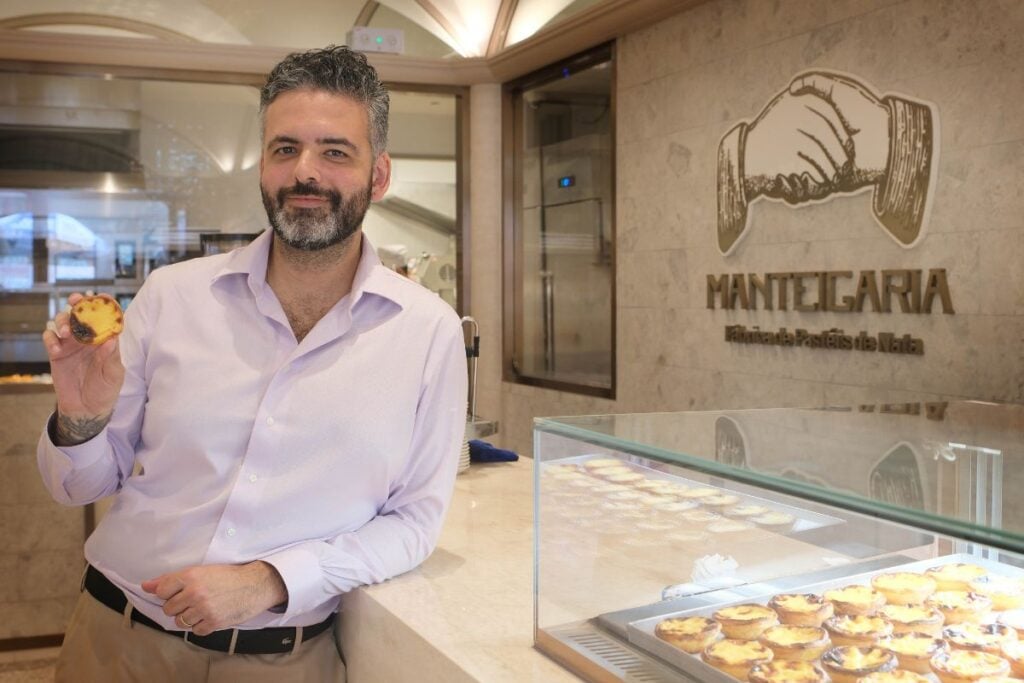
One of Portugal’s leading pasteis de nata brand earliest fans, Fabio Pombo leads Manteigaria in Hong Kong entering a sweet competitive market
A decade cooking has brought Fabio Pombo into nearly every Hong Kong kitchen guided by Portugal’s international culinary reach.
With its second iteration in SoHo, Fabio left his hometown Lisbon and joined the 17-year-old Casa Lisboa as chef in 2017, injecting a modern, age-appropriate touch to the menu.
His three-year tenure was followed by a head chef stint at the 1866-founded Club Lustaino, a private members club in Central patronised by residents of Portuguese and those with former colonial backgrounds, be that Brazilian or Macanese.
As its grand gold doors swung open in early June drawing prying public eyes, the chef’s next story began with Manteigaria’s official launch in Hong Kong, a religiously-adored egg tart brand with 15 locations in Portugal and eight in Europe.
A new mover in the city’s egg tart space, Fabio, in his role as general manager of Hong Kong operations, wants Hong Kong to experience the preeminent recipe that has come to influence the local and Macanese daan taat and pou taat.
“Hong Kongers love egg tarts, but they have never had the real thing,” Fabio says. “The egg tarts we love here come from the Portuguese way of doing these things, using puff pastry and cooking custard using eggs and milk.”
“The Brits were the ones to introduce the egg tarts to Hong Kong, but I think also the egg tarts imported by the Brits to Hong Kong came from a Portuguese connection. The real pastel de nata has been missed here.”
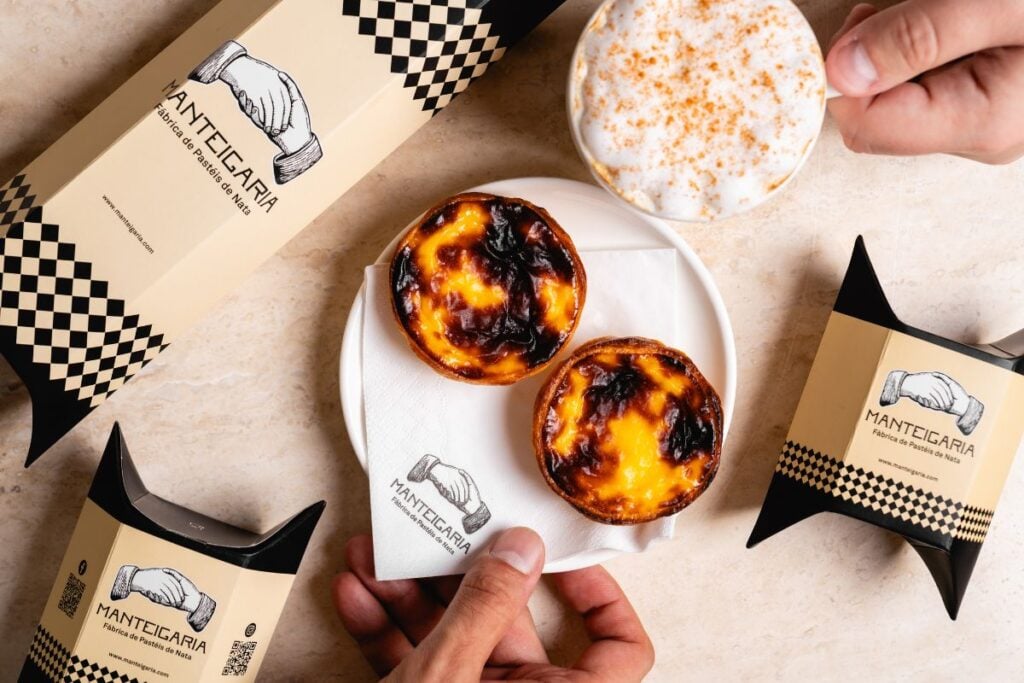
The pasteis de nata takes shape with flaky yet soft pastry and a creamy custard filling made with sugar, milk, flour, eggs, and a dash of cinnamon. The word ‘egg tart’ is not uttered by the staff at Manteigaria’s shop in Central; the pastries baked by the hundreds daily are referred to strictly as nata.
“One of our slogans, especially for Asia [at our Macau and Hong Kong stores], is ‘we are not an egg tart’. People know that this is the great grandfather of the daan taat and pou taat.”
“For us, it is always important that we can spread this message, both culturally and historically in terms of an expectation for our guests and the mission of our brand in Asia.”
Already operating in Macau for a year, the allure for Manteigaria in Hong Kong is apparent with the city’s egg tart fandom. It is a personal story for Fabio too.
“Every time I go back to Portugal, I was very happy to see that Manteigaria was becoming stronger and expanding in the country, and I was always bringing pasteis de nata from Manteigaria to my friends in Hong Kong. When I saw the opportunity to bring the brand to Hong Kong, it all made sense.”
Manteigaria has one of the largest footprints across Portugal and the continent for a nata-cum-egg tart brand, founded in 2014 and now operating across Portugal, France, and Spain. Before Fabio began working for Manteigaria six months ago, he was introduced to their sweet nata when their first ever location opened in his apartment block in Lisbon the same year.
One pasteis de nata at Manteigaria in Hong Kong costs HKD15, priced nearly identical to the €1.5 price tag in Portugal. Identical, however, is not the recipe.
Portuguese milk and eggs are not permitted for import into Hong Kong, compelling Manteigaria to search regionally for alternatives. Hokkaido milk and eggs, long established leaders for their rich taste, were too overpowering for the recipe; the Japanese orange yolk changed the colour of the nata from its signature soft yellow. Australian, Thai, and Vietnamese products were tried too.
Ultimately, eggs from Hubei Province in the mainland and locally sourced milk formed the partnership to craft the nata retaining a near-similar taste as Portugal’s version.
Unlike Manteigaria’s contemporaries, be that Cantonese, French, or Macanese versions, cans of sweet natural cinnamon and powdered sugar can be found at the Queen’s Road Central store for sweetening each bite. This is the Portuguese way to enjoy the pastry. Fabio’s team recommends first-time nata-enjoyers to dust their nata with both toppings.
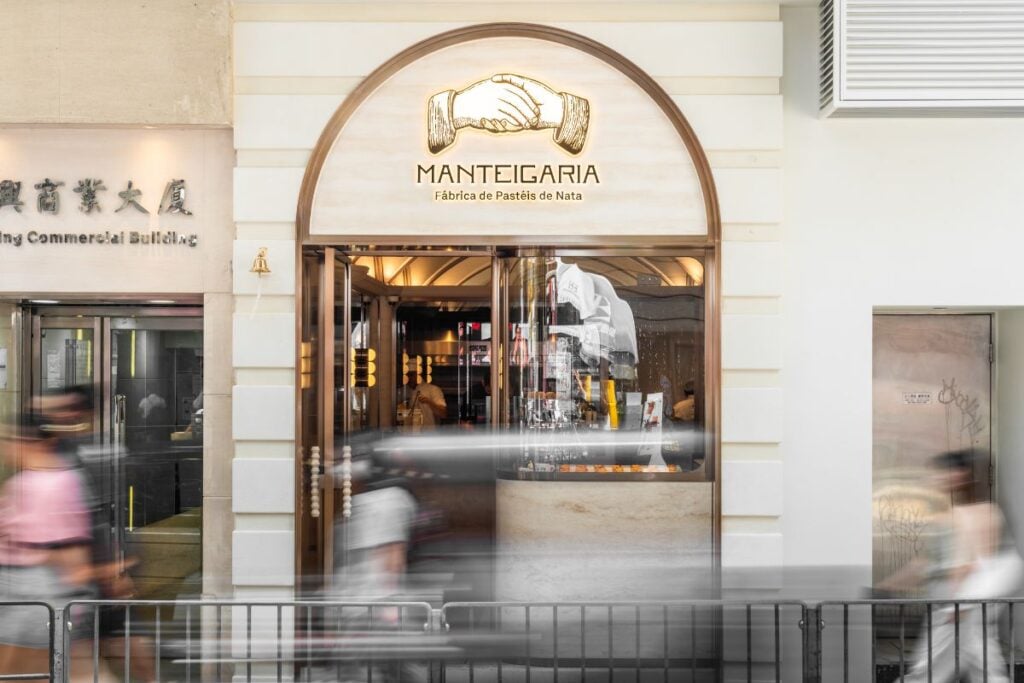
For Fabio and his compatriots, Manteigaria is dressed in nostalgia. “My grandparents’ house used to have these sort of [curved and airy] ceilings, typical in old houses, churches, and monasteries. The [golden] arch outside of our shop is one of our main features with handles on the door resembling a stack of egg tarts.”
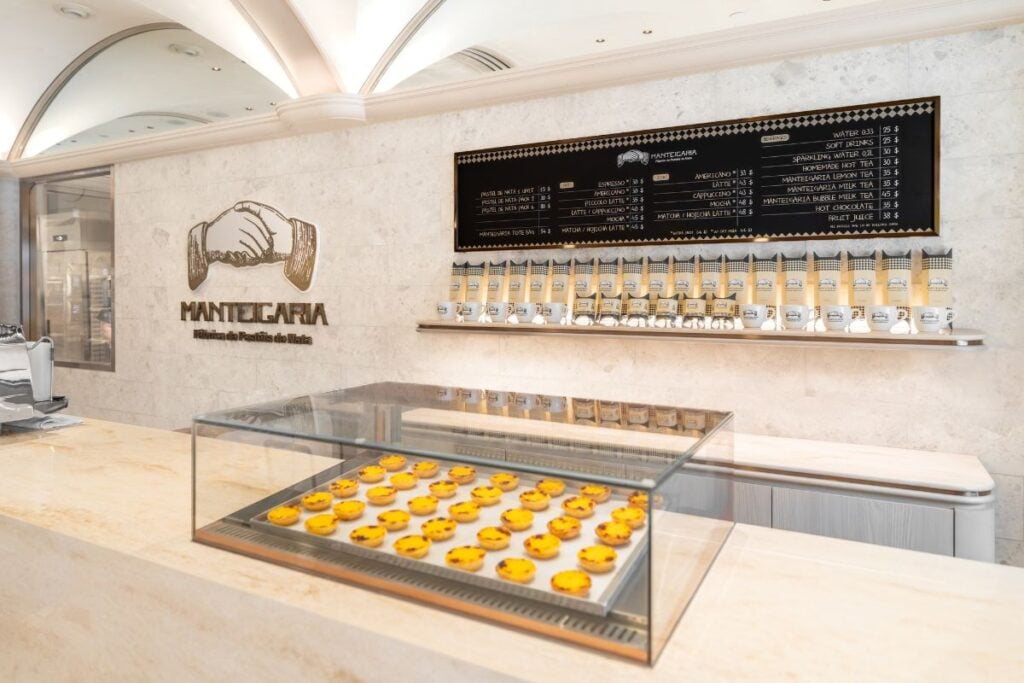
Completing the Portuguese look are tiles from Lisbon constructed elegantly on the floor and white marble shaping up the standing counter. A large window opens the kitchen up to customers, housing an Italian oven reaching 450 degrees, essential for producing the signature char for the nata.
“Every Portuguese is proud to have Manteigaria here in Hong Kong because it’s the first time that we have a Portuguese name here, especially on a road like Queens Road Central.”
One thing is presenting a product and a brand that is truly Portuguese, another is adapting to the local palate of Hong Kong. Fabio tells of matcha and sesame flavours on the horizon for local additions to the menu, matched with a Hong Kong-style lemon tea and bubble tea to chase down the pastries.
Two more Manteigeria locations are planned for Hong Kong in high foot traffic areas. The pasteis de nata craze is just getting started.
Pay a visit to Manteigaria in Central to taste what makes Portugal’s pasteis de nata a classic.

