
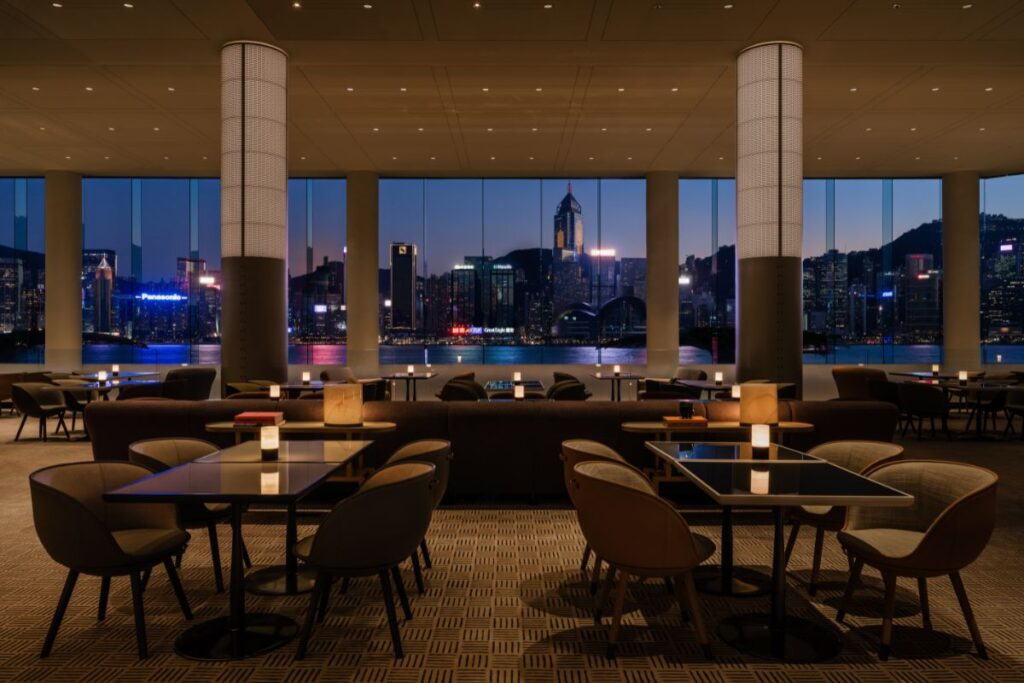
One might not expect traditional dim sum plates to arrive coloured in rainbow tones, but at Lung Dim Sum that is all the rage.
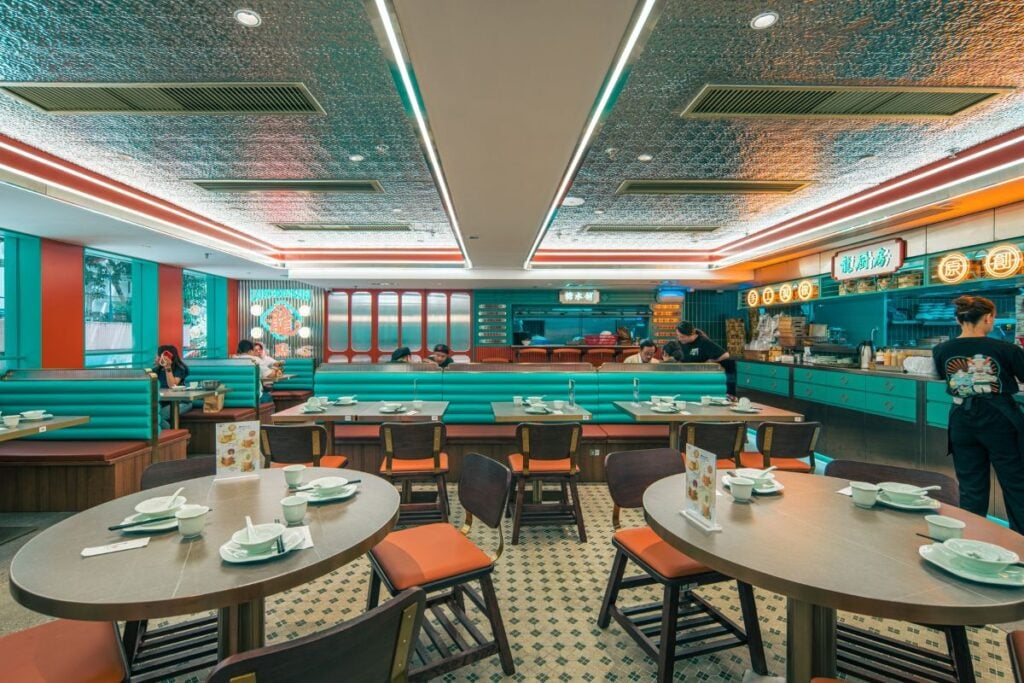
Their four restaurants in Hong Kong carry nods to a local heritage of yum cha with iconography and familiar recipes, but the dining space is ecstatically coloured with greens, oranges, golds, and neon with twists also found on the table.
In the touristic neighbourhoods of Tsim Sha Tsui, Wan Chai, and Causeway Bay, the dim sum chain has been swept up in a tourist mania of sorts, enjoying increasing foot traffic from overseas visitors seeking “dim sum culture with a fresh twist”.
“We are quite innovative in the area [of dim sum],” Ella Yu, co-founder of Lung Dim Sum, shares with Foodie.
Whilst traditional dim sum restaurants typically serve each dim sum plate in three pieces, Lung Dim Sum has specialised with their premium dim combo featuring six different pieces of dim sum bites to savour a plethora of the subcuisine. All other dim sum plates are shared in multiples of two, allowing for a solo diner or large group to enjoy every flavour on the table.
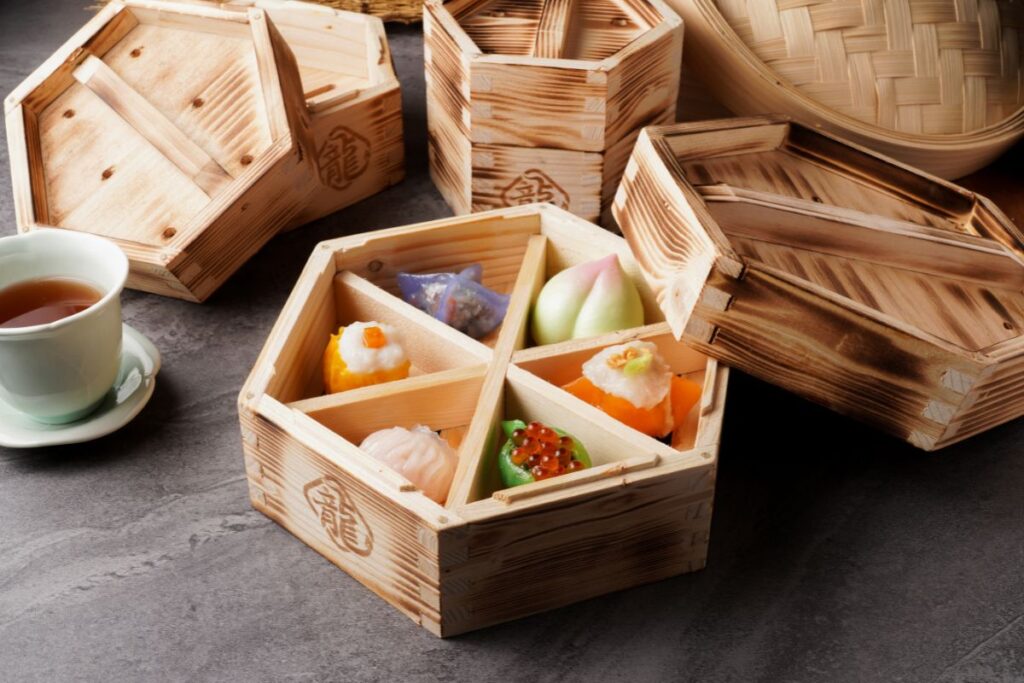
On the menu, tourists can expect the classics – chicken feet, beef balls, BBQ pork buns, and shrimp dumplings – but also a twist that sets Lung Dim Sum apart from the likes of Lin Heung Lau, Lok On Kui, and London Restaurant.
Mixed within the menu is the salted egg cuttlefish siu mai, handmade asparagus sauce quicksand bun, handmade coconut latte bun, and steamed rice roll with sole fillet in Sichuan sauce.
All dim sum served at the chain is made in their Hong Kong-based factory, with age-old traditions respected states Ella. “Our siu mai is one of our most popular dim sum dishes. We try to develop new recipes on how we can modernise the dish. For example, we serve a six flavour combo siu mai set with flavours like Indian curry, Singapore pepper crab, and Tom Yum curry.”
Beyond the table and throughout the restaurant, Ella finds Lung Dim Sum has benefited from their brand’s idiosyncratic look and feel in attracting a wealth of mainland Chinese, Taiwanese, Filipino, and Korean tourists.
“We are more contemporary and spacious as compared to a traditional restaurant. Youngsters come here all the time to take photos and post us on Instagram!”
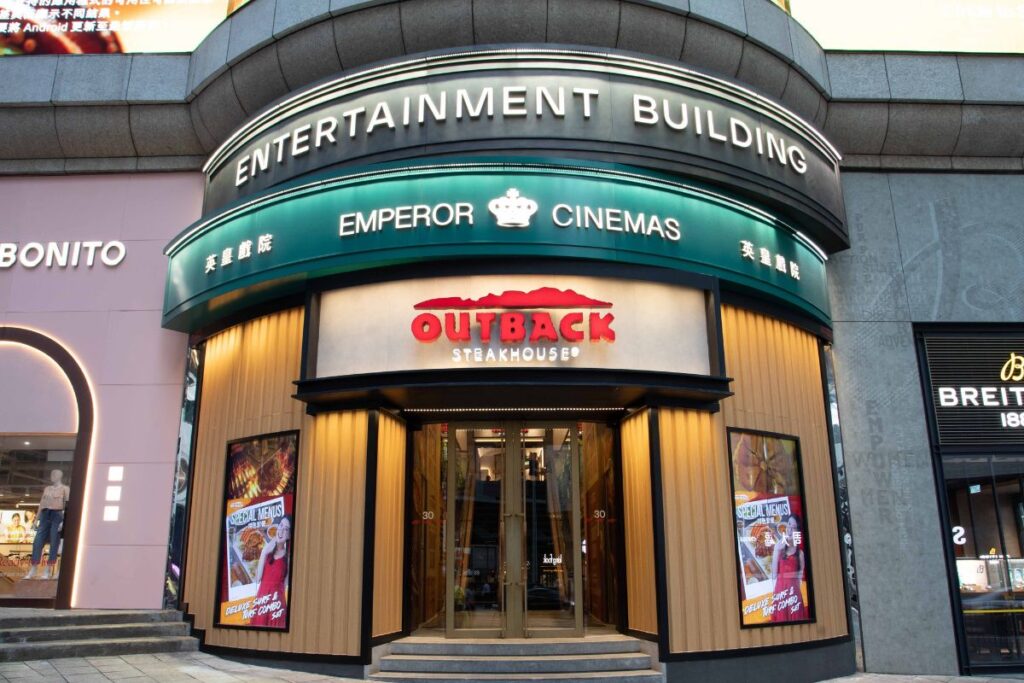
Brands counting Hong Kong as home for multiple generations and decades have had to become more nimble in adapting for changing tourist tastes. Proceeding Lung Dim Sum’s birth by more than 22 years, Outback Steakhouse has – almost – weathered every storm paining the city’s restaurant business.
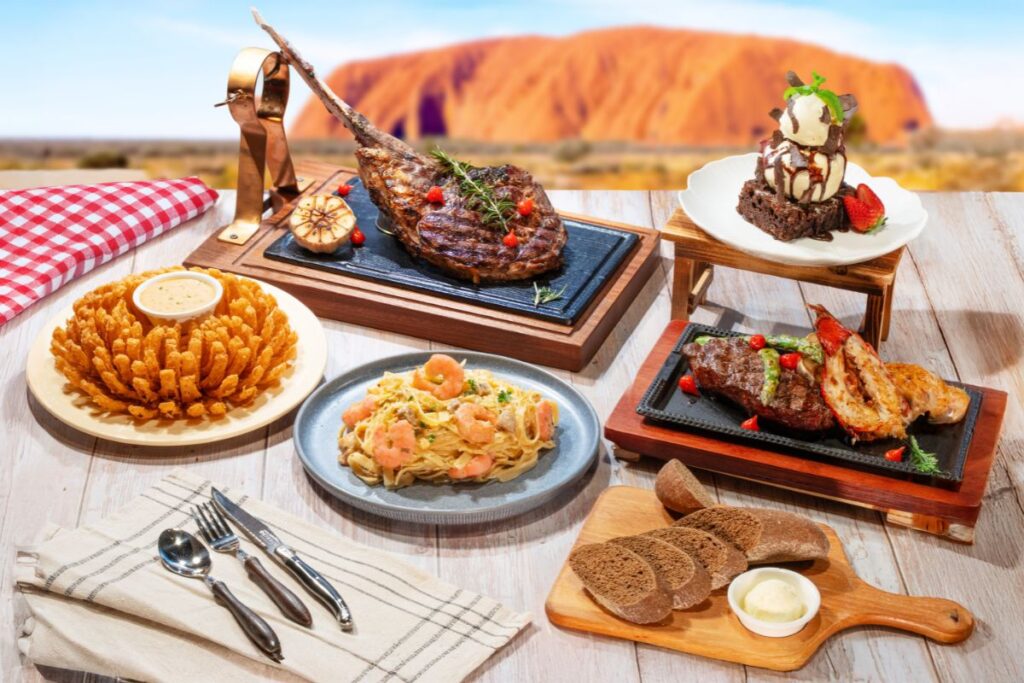
The legacy brand proved its merit in the 2000s introducing their signature bloomin onion appetiser, steak, and meaty sharing plates to the city. Outback Steakhouse’s grand menus and numerous options instantaneously appealed to the Hong Kong palate.
Yet, after the Australian-themed restaurant chain announced the closure of nine out of their 19 branches in Hong Kong in July 2024, the brand was seen as an example for the city’s hurt restaurant business.
“Due to the macro [business] environment in Hong Kong changing post-pandemic, with customer tastes changing, we made the decision to downsize our tourist locations and focus on locations within residential areas,” Patrick Kwok, marketing manager for Outback Steakhouse, notes.
The chain’s two Tsim Sha Tsui locations and one in Wan Chai closed to bring focus onto the top-tier outlets located in central Kowloon and residential areas within the New Territories.
As Outback Steakhouse’s downsizing caused a shock within the industry, the move reflected a short-term issue affecting Hong Kong’s rebirth as a tourist destination in 2023 and 2024.
From 2025, the focus shifted to bringing mainland Chinese tourists through the door, a demographic that represents more than 75% of Hong Kong’s international visitors.
“We created our Xiaohongshu account in 2025 to collaborate with food influencers in mainland [China] to create awareness [of our restaurant chain] for tourists before they arrive in Hong Kong.”
Patrick states that brand building has been at the forefront of the months-long Xiaohongshu campaign, working with online figures mainly from the Greater Bay Area, to primarily introduce users to what Outback Steakhouse stands for.
“We have produced content that answers practical questions about our brand, such as where Outback Steakhouse is located and what kind of experience diners will have.” Patrick notes the advertising campaign will continue throughout 2026 to accommodate and simplify the experience for mainland Chinese tourists.
In the spirit of modernising Outback Steakhouse, the restaurant chain began a partnership with restaurant operations platform inline in 2025 to amp up convenience in dining.
“We upgraded our entire portfolio of restaurants to integrate inline’s reservation system within our app, allowing diners to reserve tables through different channels such as our website, Google, and social media.”
“Customers can now use inline’s queue system through our mobile app to place a ticket during busy operating hours to reduce time waiting at our restaurants.”
Patrick notes that the chain’s 2025’s performance was strong, with this trend predicted to continue through 2026.
Equally, many restaurateurs and hoteliers expect 2026 to reward gritty efforts to rebuild the industry’s healthline after a shaky post-pandemic opening.
In 2023, 34 million visitors poured into Hong Kong, but new stats released by the Hong Kong Tourism Board this week revealed that nearly 50 million visitors booked trips to the city in 2025, representing a 12% increase from 2024.
Three years ago, news headlines and business plans fixated on resuming Hong Kong to its pre-pandemic greatness, where 65.15 million visited Hong Kong.
Returning to the golden days of tourism in the city was a pipedream, businesses had to look within to provide more sustainable goals to drive eyes back on Hong Kong in a new business environment.
As the Regent Hong Kong reopened its doors in November 2023, managing director Michel Chertouh set out a plan to reign in both locals and tourists to enjoy their food-centric hotel mission.
“Since the beginning of the Regent [brand] in Hong Kong [in 1980] and rebranding to InterContinental [in 2001], we have always been an established food and beverage destination within the local community. This was very present in the mind of the collective memory of Hong Kong when we reopened,” Michel tells Foodie.
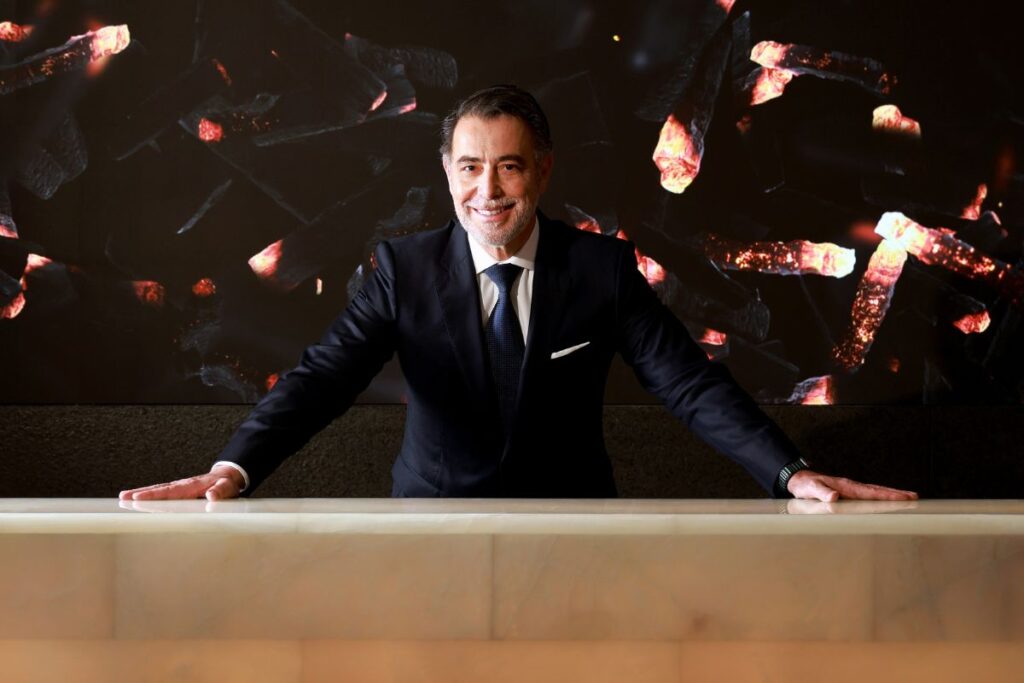
“The need to establish and have a very diverse offering,” both in the 1980s through to the modern day, “is very important to be relevant. We can offer different experiences to what is the heart and the pulse of Hong Kong, the Victoria Harbour. This is an advantage that somehow we have integrated.”
With roughly 90% of their clientele visiting their six restaurants and bars being Hong Kong residents, favouring the Harbourside buffet restaurant and two Michelin-star Lai Ching Heen, their strength for attracting tourists lies at Nobu Hong Kong. The restaurant was the first outpost in Asia outside of Japan having opened in 2006.
“ Nobu is a very well established brand within the international community from different markets in the west, whereas our Cantonese restaurant [Lai Ching Heen] may have a natural interest with the local community.”
With Regent Hong Kong promoting itself as a dining destination, both in press releases, social media, and city-wide marketing campaigns, Nobu is central to such plans in drawing international business visitors and holidaymakers who trust the same flavours as found in Las Vegas, Milan, Dubai, and Sydney.
The managing director has noted Lai Ching Heen has witnessed increased traffic from mainland Chinese guests who monitor the China-founded 2025 Black Pearl Restaurant Guide, which awarded the restaurant Two Diamonds.
Central to retaining Regent Hong Kong’s icon as an attractive destination for hotel guests to dine in is through collaborations.
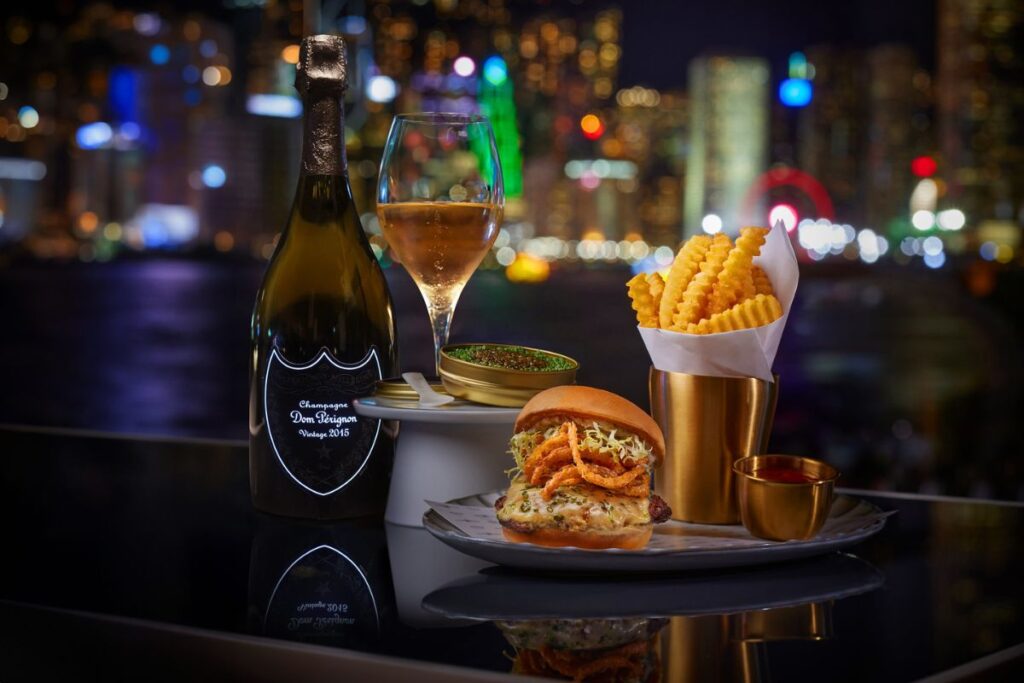
Both Harbourside and The Lobby Lounge, “the most democratic place [in the hotel] connecting you to the harbour with locals mixing with travelers from the international and the mainland [Chinese] community,” had become a breeding ground last year with the hotel experimenting on flavours enticing both locals and tourists alike.
The hotel partnered with Shake Shack to create a new foie gras burger with caviar fries set in late 2025, joined Regent Taipei to serve the Taiwanese hotel’s award-winning beef noodle soup, brought Tokyo’s Shogun Burger to the menu for a week, and collaborated with Hong Kong Ballet to host a Frida Kahlo-inspired afternoon tea set.
“ By bringing elements into the hotel that are experientially driven that our guests may not have the opportunity to experience regularly, we can stay relevant in our offerings in Hong Kong.”
Michel teases that 2026 will hold more grand and exciting collaborations within the hotel premises that will excite Hong Kongers and tourists visiting the city.
